
Gray is the Jones County seat, just northeast of Macon, and the housing is a mix of in-town older properties and spread-out rural acreage. The county has grown as a commuter area for people working in Macon while keeping genuinely rural land, and both halves show up in the work we do here.
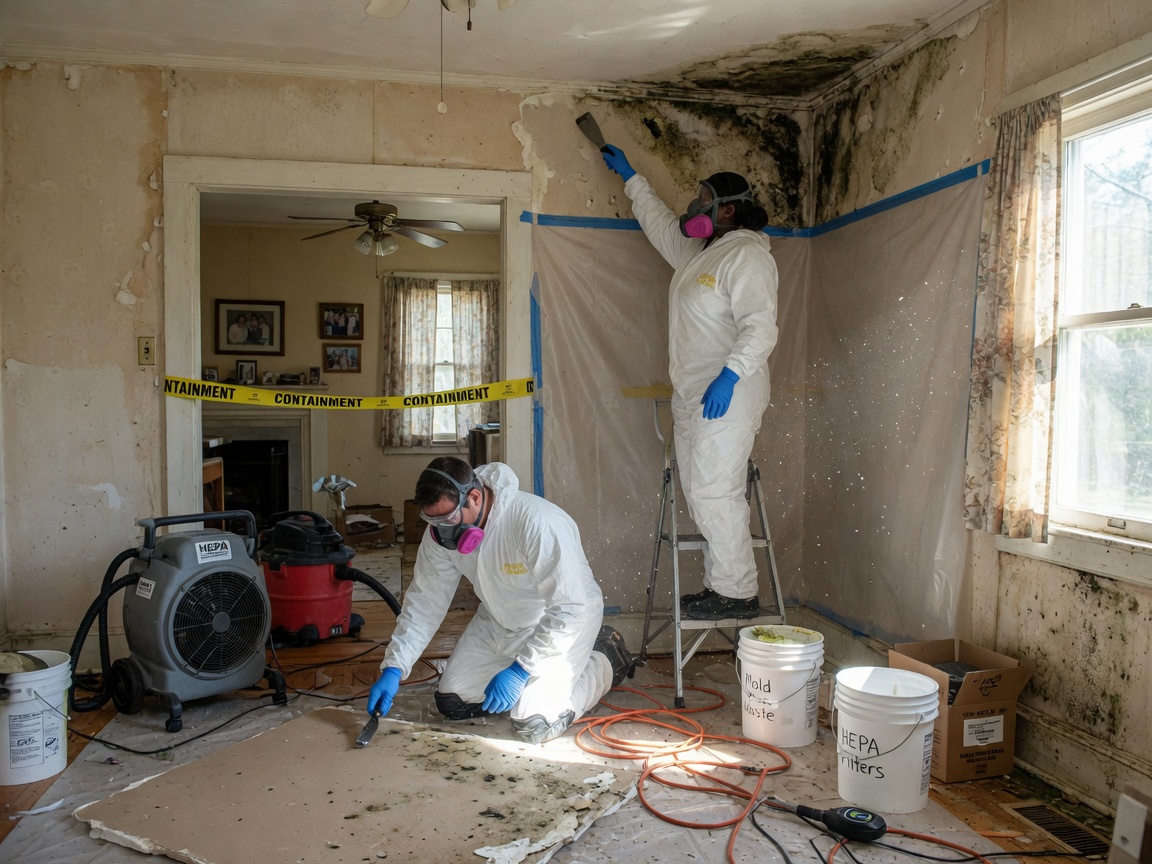
In-town Gray housing follows the older pattern: crawl spaces over bare clay, no vapor barrier in many cases, and air conditioning retrofitted into houses built before it existed, with flex duct running through unconditioned attics. The two leading causes are ground moisture rising through the floor and condensation dripping off sweating duct insulation onto ceiling drywall. The second of those produces growth on a bedroom ceiling with a perfectly sound roof above it, and it is the most commonly misdiagnosed problem we see.
Rural Jones County properties add well and septic systems to the picture. A saturated or failing septic field keeps the surrounding ground wet, and on the rolling terrain here that water travels downhill — frequently toward the house and into the crawl space. Well houses and pressure tanks in unconditioned enclosures condense as a matter of course. Neither is dramatic, but both are regularly the actual source behind a crawl space problem that someone has already paid to treat once.
The terrain itself matters. Jones County is hillier than the land south of Macon, and sloping lots concentrate runoff. Rather than water arriving evenly around a foundation, it collects at one or two corners, and that is where the crawl space moisture and the growth turn up. Part of every assessment here is an exterior walk to see where the ground actually falls and where the downspouts discharge, because regrading one corner is often cheaper and more effective than anything we could do under the house.
Outbuildings are common and worth inspecting. Barns, workshops, equipment sheds and detached garages stay unconditioned year-round in this climate, and stored contents inside them develop growth from humidity alone. More than one Jones County client has called about the house and found the larger loss was in the shed.
Two pages cover most Gray work: attic mold removal for the sweating ductwork behind ceiling growth under a sound roof, and crawl space encapsulation for ground moisture below. Mold inspection and testing establishes which, and includes the exterior walk that finds where runoff concentrates on a sloping lot. Black mold removal covers removal, carpet and furniture mold removal outbuilding contents, and water damage restoration an active leak. All services; nearby Jones County, North Macon and Milledgeville.
Around Gray
We regularly work near:
- 📍Gray Highway
- 📍Clinton Street
- 📍Highway 129
- 📍Jones County Courthouse
- 📍Highway 11
Mold Remediation in Gray — Local Notes
- •Mix of older in-town housing on crawl spaces and spread-out rural acreage on well and septic.
- •Retrofitted air conditioning running through unconditioned attics causes duct condensation onto ceiling drywall.
- •Rolling Jones County terrain concentrates runoff at one or two foundation corners rather than spreading it evenly.
- •Saturated or failing septic fields uphill of a house are a recurring hidden crawl space moisture source.
- •Unconditioned barns, workshops and sheds hold year-round humidity and often hold the real contents loss.