
Lizella sits in west Bibb County and is genuinely rural in a way that changes how a mold job runs. Properties are larger, houses are more spread out, many are on well and septic rather than municipal services, and outbuildings are the norm rather than the exception. None of that makes the mold different, but it changes where it comes from and where we look.
The dominant cause out here is ground moisture into open crawl spaces. Lizella's housing stock is largely older and rural, built on brick piers or block with bare clay underneath, and no vapor barrier at all in a good proportion of cases. In this climate that soil releases moisture continuously, and because the houses are spread out and often partly occupied or seasonally used, the resulting odour goes unnoticed for far longer than it would in a dense neighbourhood.
Well and septic systems are the second thing we check. A failing or saturated septic field keeps the ground wet, and on a sloping rural lot that water tracks toward whatever is downhill — often the house. Well houses and pressure tanks in unconditioned enclosures condense routinely. Neither is dramatic, but both are regularly the actual source behind a crawl space problem that has been treated unsuccessfully before.
Outbuildings carry a disproportionate share of the loss in Lizella. Barns, equipment sheds, workshops and detached garages stay unconditioned year-round, and anything stored in them — leather, upholstered furniture, boxed paper, tools, instruments — develops surface growth from humidity alone with no water event. We inspect them as part of the property rather than quoting the house in isolation, because more than once the contents loss in the shed has exceeded the remediation in the house.
Practical access matters here more than in town. Long driveways, soft ground after rain, and crawl space entries that are genuinely tight all affect how equipment gets in. We would rather look at the property and tell you honestly what the access adds than quote from a photograph and revise it on the day. From our Mulberry Street base Lizella is a short run west, and we work it on the same pricing as in-town Macon.
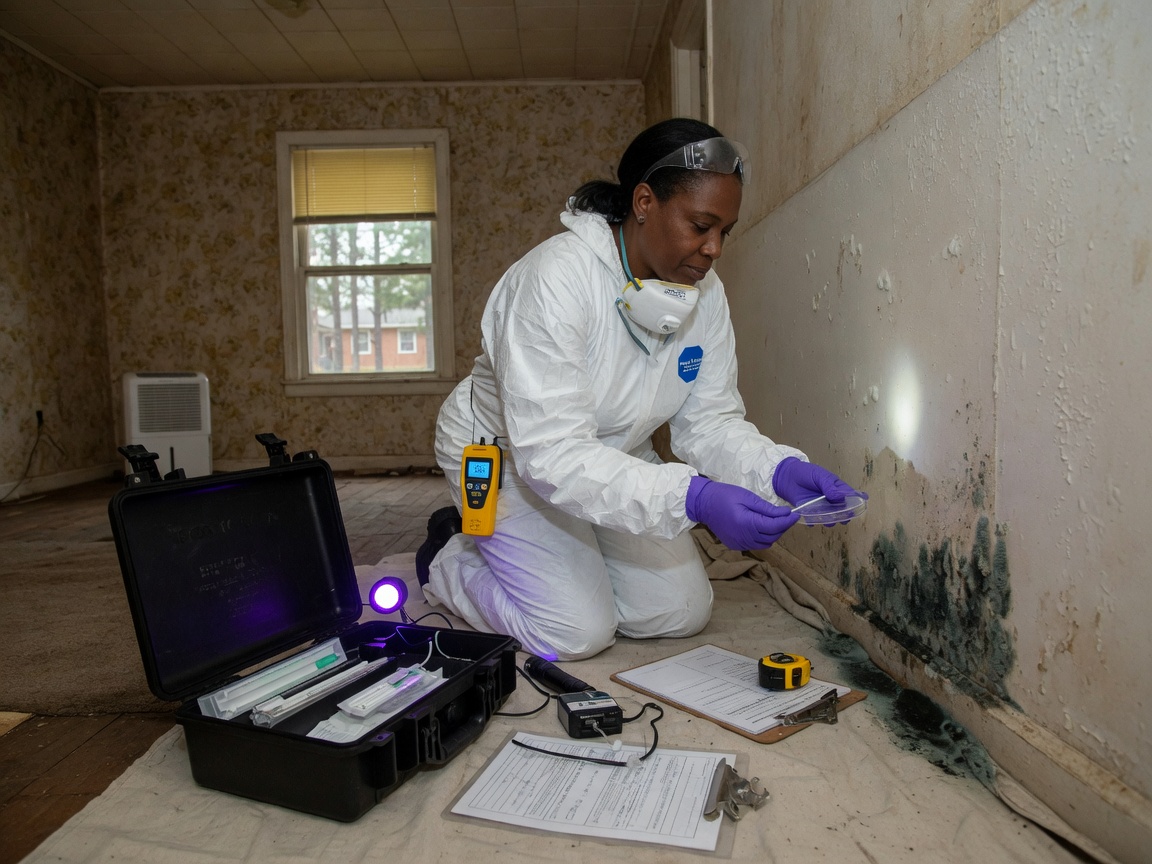
Out here the work almost always starts under the house, so crawl space encapsulation and basement and crawl space mold remediation are the pages that matter, with mold inspection and testing to establish whether the water is arriving or evaporating. Barn and workshop contents fall under carpet and furniture mold removal, ceiling growth under attic mold removal, and removal itself under black mold removal. All services; nearby Bellevue, Napier Heights and Bibb County.
Around Lizella
We regularly work near:
- 📍Thomaston Road
- 📍Highway 74
- 📍Lizella Fire Station
- 📍Rivoli Road
- 📍Hollis Road
Mold Remediation in Lizella — Local Notes
- •Largely older rural housing on brick pier or block foundations with bare clay crawl spaces and frequently no vapor barrier.
- •Well and septic systems are common, and a saturated field uphill of a house is a recurring hidden moisture source.
- •Unconditioned barns, workshops and sheds hold year-round humidity and are often where the real contents loss is.
- •Spread-out, partly occupied properties mean odour and growth go unnoticed for far longer than in dense neighbourhoods.
- •Long driveways, soft ground and tight crawl space entries affect equipment access and are assessed before quoting.