
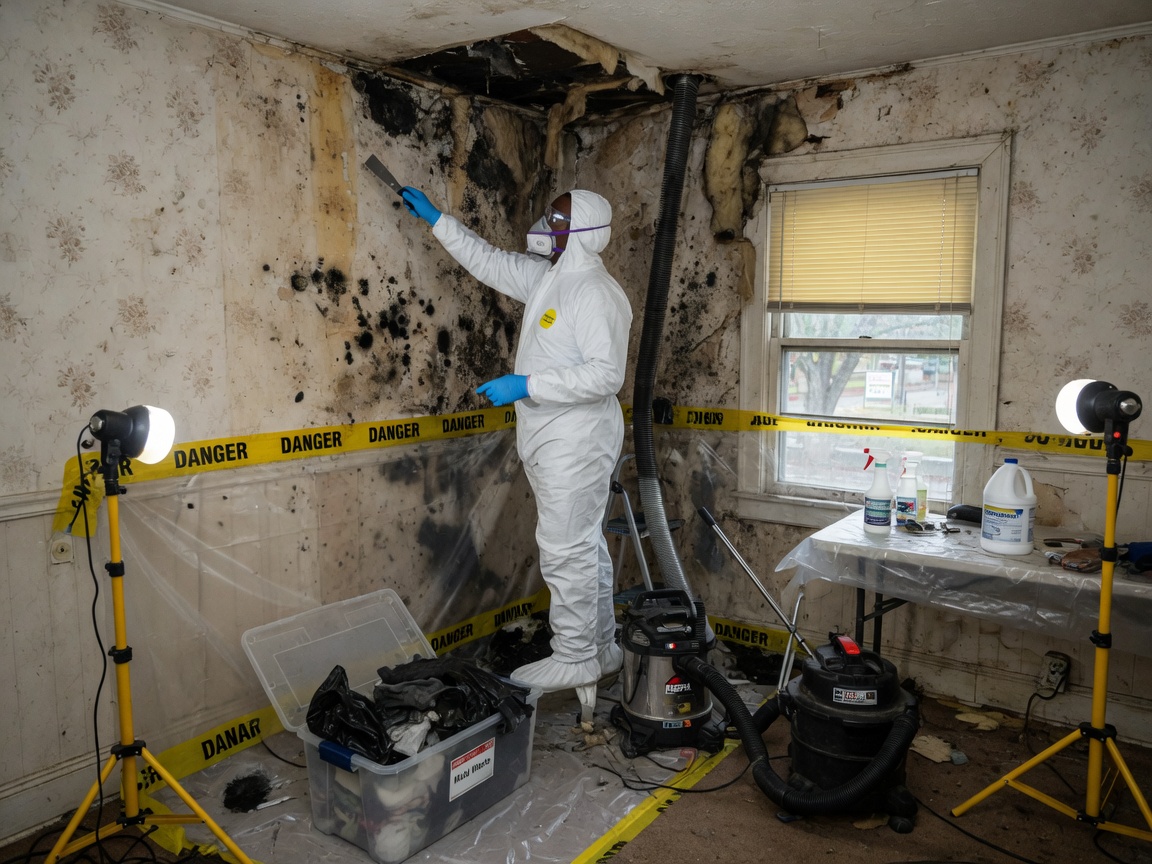
Tattnall Square Heights sits within the Cherokee Heights National Register district on the College Hill Corridor, immediately around Tattnall Square Park and close to Mercer. The housing is early twentieth century, the lots are compact, and the mix of owner-occupied and student-tenanted property means the same style of house can be in very different condition on the same block.
The tenanted properties produce the most predictable problems. Units sit closed and unconditioned through the summer break with the power down or the thermostat off, and in a Macon July that is enough on its own. Interior humidity climbs unchecked for weeks, and growth establishes on closet walls, behind furniture against exterior walls, on bathroom ceilings and on anything soft left in the property. The calls come in August when students return, and by then it is not a wipe-down. If you manage rentals here, running the air at 78 through the break costs a fraction of the remediation.
Many of these houses were subdivided into apartments decades ago, and the conversions are where the structural problems sit. Bathrooms and kitchens were added without adding ventilation to match, which means extraction fans that terminate in the attic rather than through the roof, or no fan at all in a windowless bathroom. Plumbing was run through exterior wall cavities that were never insulated for it. Units frequently share an attic or a wall cavity, so containment has to account for the adjoining side or negative air pressure simply pulls spores across.
Construction is plaster over wood lath on brick piers over bare clay, with original single-glazed sash windows in most properties. Each of those is a distinct problem. Plaster hides growth and reads badly on a surface meter. The bare clay crawl space releases moisture into the floor structure continuously. And single-glazed sash with worn glazing lets condensation run down and sit on the sill and apron through the cooling season, keeping the wall below damp year after year.
Tattnall Square Park's mature canopy shades much of the surrounding housing, which keeps roofs and north-facing walls slow to dry after rain and fills gutters and roof valleys with debris all year. A meaningful share of the calls from these streets trace back to a blocked valley or an overflowing gutter rather than to a roof that has failed.
For tenanted properties the practical order is mold inspection and testing while the unit is empty, then mold and mildew removal or black mold removal depending on whether the growth is on the surface or in the material. Shared-attic conversions fall under commercial mold remediation, bath ventilation faults under attic mold removal, and the crawl space under crawl space encapsulation. Landlords and tenants should see post remediation clearance testing. All services; nearby College Hill Corridor and Cherokee Heights.
Around Tattnall Square Heights
We regularly work near:
- 📍Tattnall Square Park
- 📍Mercer University
- 📍College Street
- 📍Oglethorpe Street
- 📍Coleman Hill Park
Mold Remediation in Tattnall Square Heights — Local Notes
- •Student-tenanted properties left closed over summer break are the most predictable source of August mold calls.
- •Decades-old apartment conversions added bathrooms and kitchens without matching ventilation.
- •Subdivided units share attics and wall cavities, so containment must seal the adjoining side.
- •Original single-glazed sash windows keep the wall below the sill damp through the cooling season.
- •Park canopy shades roofs and north walls and fills gutters and valleys with debris year-round.