
Downtown Macon is a different kind of job from the residential neighbourhoods, because the buildings are different. Substantial masonry commercial structures, many from the late nineteenth and early twentieth century, with upper floors that sat vacant for decades and have been converted to apartments and offices over the last twenty years. The problems here come from the conversions and from the way old masonry handles water.
Solid masonry walls work differently from framed walls and this is the central technical point. A brick wall two or three wythes thick absorbs water during rain and releases it slowly afterwards — it was designed to, and it worked for a century because the interior face was plaster that could breathe and the building was not air conditioned. Conversions that frame and insulate directly against the interior face of that masonry, with a vapor barrier in the wrong position, trap moisture inside the new assembly. Growth appears behind new drywall within a few years and the occupants have no idea it is there. We find this repeatedly in converted upper floors, and the fix involves the wall assembly rather than a treatment.
The second recurring issue is low-slope and flat roofs. Most downtown buildings have them, many are at or past the end of their membrane life, and water that gets through does not drip straight down — it travels along the deck and appears in a room well away from the actual failure. Parapet walls and roof drains are the usual failure points, and drains blocked with debris turn a flat roof into a shallow pool during a summer thunderstorm.
Vacant or partly occupied floors above an occupied space are a specific downtown risk. An unconditioned, closed floor in a Macon summer reaches very high humidity, and that moisture migrates downward and through shared wall cavities into the occupied space below. More than once we have been called about an apartment and found the source was an empty floor two storeys up. Any assessment downtown should include the floors above and below the one with the complaint.
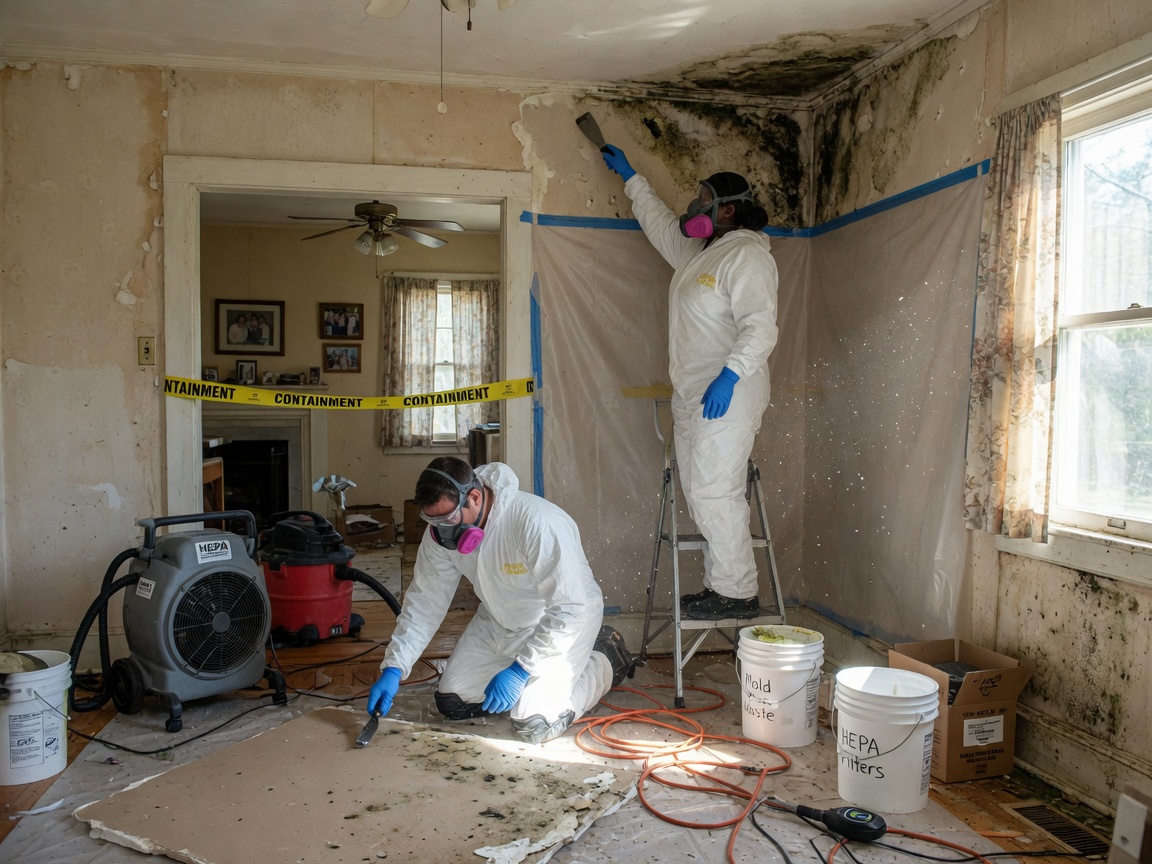
For commercial and multi-tenant work, containment and scheduling are the practical constraints rather than the technical ones. We work overnight or on closed days so businesses keep trading, isolate the affected zone from shared return air paths so remediation in one tenancy does not distribute spores into others, and provide the written documentation that landlords, tenants and commercial insurers need when a lease apportions the cost.
Most downtown work falls under commercial mold remediation, scheduled around trading hours, with mold inspection and testing first and post remediation clearance testing for the lease or insurance file. Flat-roof intrusion goes to water damage restoration, and anything still actively leaking to emergency mold removal. Converted upper floors frequently need historic home mold remediation, and tenant complaints are often answered by indoor air quality testing. See all services, plus nearby Intown Macon, Beall's Hill and Pleasant Hill.
Around Downtown Macon
We regularly work near:
- 📍Cherry Street
- 📍Mulberry Street
- 📍Second Street
- 📍Tubman Museum
- 📍Macon City Auditorium
- 📍Ocmulgee River
Mold Remediation in Downtown Macon — Local Notes
- •Solid masonry walls absorb and release water slowly, so conversions framed tightly against them trap moisture in the new assembly.
- •Low-slope and flat roofs are common and often past membrane life, with parapets and blocked drains the usual failure points.
- •Water entering a flat roof travels along the deck and surfaces well away from the actual failure.
- •Vacant or closed upper floors reach high humidity and push moisture down into occupied space below.
- •Multi-tenant buildings share return air paths, so containment must isolate the affected zone from the rest of the system.